A strategic framework that addresses the challenges posed by climate change through coordinated efforts across line ministries, civil society, international agencies and the private sector — enhancing the country's resilience and capacity to manage climate impacts and reduce greenhouse gas emissions.
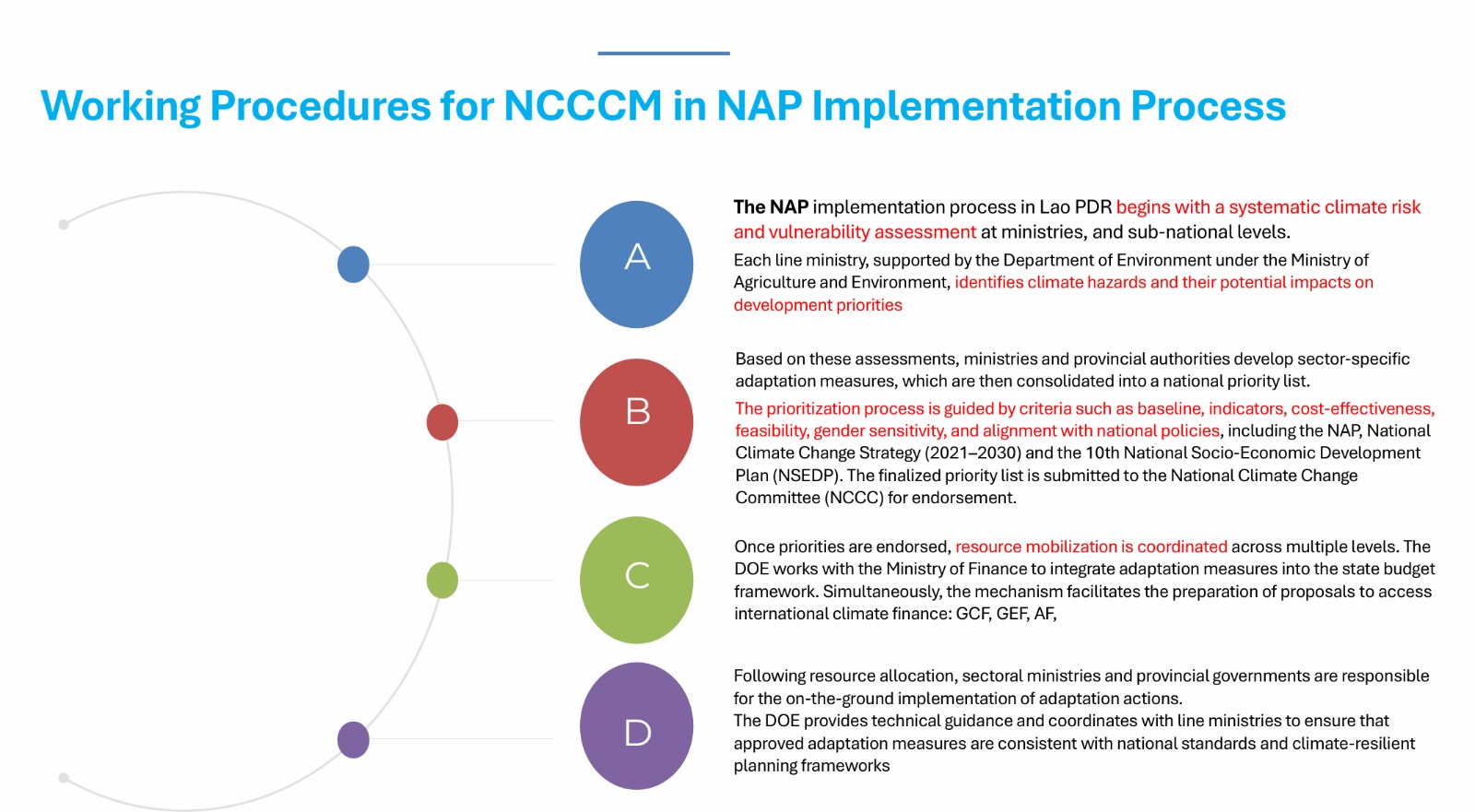
The National Climate Change Coordination Mechanism (NCCCM) serves as a strategic framework to address the challenges posed by climate change through coordinated efforts among various stakeholders — including line ministries, civil society organizations (CSOs), international agencies and the private sector.
This mechanism acts as a platform for enhancing the country's resilience and capacity to effectively manage climate-related impacts and reduce greenhouse gas emissions (GHGs). It aligns national institutions around a shared adaptation and mitigation agenda, ensuring that effort, data and finance flow toward the country's climate priorities.
The NCCCM is structured around five key elements — a designated focal point, a technical working group, a supporting legal framework, sustained capacity building and a pathway to climate finance — explored in detail below.
The NCCCM convenes actors from across central, provincial and district levels to share knowledge, build capacity and align climate action.
Select an element to explore how the mechanism is built — from its institutional focal point to the pathway for mobilizing climate finance.
Through the focal point, the NCCCM leads preparation and submission of the country's national climate reports — the National Adaptation Plan (NAP), National Communication (NC), Nationally Determined Contribution (NDC) and Biennial Transparency Report (BTR).